
Workforce Housing in Mississippi: A Practical Guide for Employers and Workrse
When a company brings employees into Mississippi for a construction project, industrial assignment, infrastructure work, healthcare placement, or temporary expansion, accommodation quickly becomes part of the operational plan. Workers need somewhere practical to live, and employers need a housing arrangement that fits the project’s location, workforce size, and expected duration.
A few hotel nights may be straightforward to arrange. The situation becomes different when employees need to remain in Mississippi for several months. Multiple hotel rooms can limit living space and cooking options, while a traditional apartment may involve a long lease, furniture purchases, utility setup, and other commitments that do not fit a project with a defined end date.
Workforce housing in Mississippi offers a flexible middle ground. Furnished homes and apartments can provide employees with a ready-to-live-in environment while helping employers accommodate temporary teams without establishing permanent households.
The right solution depends on the worksite, number of employees, assignment length, transportation requirements, and the type of living environment workers actually need.
What Is Workforce Housing?
Workforce housing is temporary accommodation arranged for employees who need to live away from their permanent homes while working on an assignment.
It can mean a single furnished apartment for one employee or several furnished homes or apartments for a larger project team. The appropriate setup depends on the workforce, jobsite, length of the assignment, and available properties.
For example, an engineer working in Mississippi for two months might need a one-bedroom furnished apartment with internet and parking. A construction crew working on a six-month project could have very different requirements, including multiple bedrooms, bathrooms, kitchen facilities, laundry access, and convenient transportation to the jobsite.
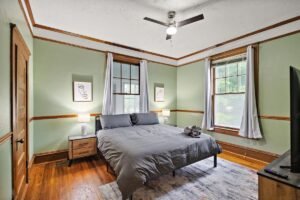
iZeal Stay’s workforce housing service is built around furnished accommodations for extended stays, including housing requirements associated with construction crews, contractors, infrastructure work, rotating teams, and project assignments.
The objective is simple: give workers a functional temporary home rather than merely a place to sleep.
Why Workforce Housing Matters for Mississippi Projects
Mississippi has a range of employment and project environments, which means temporary accommodation requirements can vary significantly from one assignment to another.
A company may bring workers into the state for construction or infrastructure work, industrial operations, manufacturing-related assignments, healthcare placements, logistics activity, facility work, or other temporary projects.
The housing needs can therefore look very different.
A project on or near the Gulf Coast may require accommodation for employees arriving from another state. A central Mississippi assignment may require housing positioned around a particular jobsite. A healthcare professional may place greater importance on a quiet residential environment and a manageable commute.
For employers, housing is more than an employee benefit. It can be part of the practical planning required to keep a temporary assignment organized and workable.
Who Uses Workforce Housing in Mississippi?
Workforce accommodation is relevant to a wide range of temporary employees, not just construction workers.
Construction and Infrastructure Crews: Construction workers frequently move between projects. A particular assignment may last several months even though the employees maintain permanent homes elsewhere.A furnished residence gives workers somewhere to establish a routine without requiring a permanent move.For employers, arranging suitable accommodation can also simplify logistics when multiple workers need housing during the same project period.
Industrial and Manufacturing Workers: Temporary employees may travel to Mississippi for equipment installation, maintenance, training, facility expansion, specialized work, or other defined assignments.These workers may need accommodation for weeks or months rather than a traditional overnight business stay. A residential setup can provide more of the facilities required for an extended assignment.
Healthcare Professionals: Temporary healthcare assignments can create another important housing requirement.A professional working in Mississippi for an extended period needs a place where they can rest and manage everyday life outside work. A kitchen, laundry facilities, reliable internet, comfortable sleeping arrangements, and reasonable access to the workplace can be particularly useful for people working long or irregular shifts.
Contractors and Project Teams: Contractors often work according to defined project schedules, but the number of people requiring accommodation may change as work progresses.A project could begin with a larger crew and later require fewer workers as different phases are completed. Flexible housing arrangements can be valuable when occupancy requirements are not fixed throughout the entire assignment.
Relocating Employees: Workforce housing can also support employees who are moving to Mississippi permanently.A new employee may need temporary accommodation while searching for a permanent home. A furnished residence gives them time to become familiar with the area, evaluate commute options, and make a longer-term housing decision without immediately committing to a conventional lease.
Choosing the Right Location for Workforce Housing in Mississippi
Location should be evaluated according to the worker’s daily routine rather than simply the city listed in the property address.
The closest property is not automatically the best option, but commute time should be one of the first considerations.
A worker who spends a substantial amount of time driving each day may have less time available for rest and personal activities. Transportation expenses can also become more significant over an assignment lasting several months.
When evaluating temporary workforce housing in Mississippi, employers should consider:
- Exact distance to the jobsite
- Typical commuting routes
- Access to major roads
- Parking requirements
- Nearby grocery stores
- Restaurants and other everyday services
- Access to healthcare when relevant
- Whether the neighborhood suits the workers’ schedules
For a Gulf Coast assignment, for example, workers may need a property within a practical driving range of the specific project rather than simply somewhere in the wider Gulf Coast region.
The same principle applies in Jackson, Hattiesburg, Meridian, Gulfport, and other Mississippi markets. Housing should be selected around the employee’s routine, not just the property’s advertised location.
What Should Workforce Housing Include?
The term furnished housing does not guarantee that every property contains exactly the same amenities.
Employers should confirm what is included before making an accommodation decision. Depending on the individual property, iZeal Stay’s furnished accommodations may include furniture, kitchen equipment, housewares, laundry facilities, utilities, high-speed Wi-Fi, and streaming television.
Because amenities vary by property, the specific residence should always be checked before booking.
For a longer assignment, employers should pay particular attention to:
- Comfortable sleeping arrangements
- Adequate bedroom capacity
- A functional kitchen
- Laundry facilities
- Reliable Wi-Fi
- Sufficient bathrooms
- Parking
- Living space outside the bedrooms
- Appropriate heating and cooling
- Convenient access to groceries and essential services
These may seem like basic considerations, but they become much more important when workers are living away from home for two, three, or six months.
What Employers Should Confirm Before Booking
Workforce accommodation should be treated as part of project planning rather than something arranged at the last minute.
Before contacting a housing provider, create a straightforward workforce housing brief.
| Requirement | What the Employer Should Confirm |
| Workforce size | Number of employees needing accommodation |
| Stay length | Expected arrival and departure dates |
| Location | Exact jobsite and acceptable commuting range |
| Bedrooms | Private or shared sleeping arrangements |
| Bathrooms | Whether the property has adequate facilities |
| Parking | Number and type of vehicles requiring space |
| Amenities | Kitchen, laundry, Wi-Fi, furnishings, and essentials |
| Budget | Total accommodation allowance rather than base rate alone |
| Flexibility | Options if workers arrive early or the project is extended |
Having this information ready makes the housing search more efficient. It also helps employers avoid choosing accommodation based only on the property’s stated occupancy capacity.
A home that technically accommodates a certain number of people may still be uncomfortable or impractical for an extended assignment.
Workforce Housing vs. Hotels
Hotels can be useful for short assignments, but the practical calculation changes as the stay gets longer.
For a multi-month project, employees may find several hotel rooms less convenient because they provide limited residential space and may offer fewer opportunities for cooking, storage, and normal household routines.
A furnished home can provide a kitchen, laundry facilities, living space, and a more residential environment.
For example, workers staying in Mississippi for four months may reasonably value the ability to prepare meals, wash clothes, relax in a living room, and organize personal belongings instead of treating their accommodation as an overnight stop.
Employers should also avoid comparing only the nightly hotel rate with a housing rate. The more useful comparison is the total cost and practical value across the complete assignment.
The right choice depends on the number of workers, duration, location, required amenities, and overall project requirements.
Workforce Housing vs. Traditional Apartments
A traditional apartment may be appropriate for someone moving permanently to Mississippi. It can be less practical for a temporary project with a known or uncertain completion date.
A conventional rental may require a longer lease, deposit, furniture, utility accounts, internet setup, and moving expenses. Those arrangements can make sense for a permanent residence but may create unnecessary commitments for a worker staying temporarily.
A furnished solution can reduce much of that preparation.
For employees who need a ready-to-live-in residence, furnished apartments and homes can be a useful alternative when the assignment does not justify establishing a permanent household.
When Extended-Stay Housing Makes More Sense
Not every workforce housing requirement involves a large crew.
An individual employee may need accommodation for several months. A relocating professional may need somewhere to live while searching for a permanent home. A specialist may be supporting a Mississippi project for an uncertain period.
In these situations, extended-stay housing can provide a residential environment for a longer assignment.
iZeal Stay’s extended-stay model is centered on furnished accommodations for stays of 30 nights or longer. Specific amenities, availability, and property details depend on the individual residence.
That distinction matters. Employers should evaluate the actual property rather than assuming every extended-stay accommodation offers identical facilities.
Making Workforce Housing Comfortable for Employees
Cost is naturally an important part of workforce accommodation, but employee comfort should not be overlooked.
Workers on early shifts, night shifts, or rotating schedules need somewhere they can rest properly. When several employees share accommodation, adequate personal space and usable common areas can make the arrangement more sustainable.
A few practical priorities can help:
Protect Sleeping Time: Consider workers’ schedules when selecting accommodation. Housing that is overcrowded or poorly suited to shift patterns can make rest more difficult.
Provide Useful Kitchen Facilities: Employees staying for months may prefer the ability to prepare meals rather than relying entirely on restaurants or takeaway food.
Confirm Laundry Access: Regular access to laundry facilities becomes increasingly important as the assignment length increases.
Keep the Commute Practical: A property with a slightly higher accommodation cost may still be the more practical option if it substantially reduces daily travel and makes the assignment easier for workers.
Check Internet Service: Reliable internet may be necessary for communication, scheduling, personal administration, entertainment, and occasional remote work. Confirm what service is available at the specific property.
Workforce Housing for Families and Temporary Relocation
Sometimes the employee is not the only person who needs accommodation.
A relocating employee may move with a spouse or children, requiring additional bedrooms and more living space. In other circumstances, a household may temporarily need somewhere to live because its primary residence is undergoing repairs.
For these situations, insurance housing may be a relevant temporary accommodation option when a home is unavailable.
The same principle applies to family workforce housing: do not select a property solely according to the number of people it can technically accommodate. Consider bedrooms, bathrooms, kitchen facilities, laundry, parking, work requirements, and the overall living environment.
Plan for Changes in the Project Schedule
Temporary work does not always follow the original schedule.
Construction can be delayed. A contract can be extended. Workers may arrive at different times. A company may increase or reduce the workforce as the project moves from one phase to another.
That makes flexibility an important part of the housing discussion.
Before booking, ask how the accommodation provider handles:
- Extended stays
- Early arrivals
- Changed departure dates
- Additional workers
- Reduced occupancy
- Property changes when circumstances require them
Also clarify whether extending the stay can affect availability or pricing.
Understanding these conditions before the assignment begins can reduce disruption if the project’s timeline changes.
A Practical Approach to Workforce Housing in Mississippi
The most effective workforce housing plan starts with the assignment itself.
First, identify who needs accommodation and how many people will be staying. Next, determine where they need to work, how long the assignment is expected to last, and whether the workforce will remain the same throughout the project.
Then establish the practical requirements: bedrooms, bathrooms, parking, kitchen facilities, laundry, internet, and other essential amenities.
Finally, compare accommodation options according to their total practical value—not simply the advertised price.
For a small number of relocating professionals, one furnished apartment may be sufficient. A larger construction or infrastructure team may require multiple furnished residences. An individual worker with a several-month assignment may be better served by extended-stay housing.
This approach allows employers to select accommodation based on the actual project rather than forcing every workforce into the same housing model.
Conclusion
Workforce housing in Mississippi should be considered part of the logistics of a temporary assignment, not an afterthought.
The right accommodation needs to work for both the employees living there and the employer managing the project. Location, commute time, bedroom and bathroom capacity, kitchen facilities, laundry, Wi-Fi, parking, total cost, and flexibility can all affect whether a housing arrangement works over the full assignment.
For a small group of relocating professionals, a furnished apartment may provide everything necessary. A construction crew or project team may need multiple furnished residences with practical access to the jobsite. For longer individual assignments, extended-stay housing can provide a residential alternative between a hotel and a permanent rental.
iZeal Stay brings these temporary housing needs together through furnished accommodation designed for stays of 30 nights or longer. The most appropriate option, however, should always be determined by the specific workforce, project, location, and duration.
A well-planned housing arrangement gives workers a comfortable place to return to after work and gives employers one less logistical challenge to manage while the Mississippi project moves forward.