
Corporate Housing vs Extended Stay Hotels: Which Saves Companies More?
1. Why This Comparison Matters for Companies
As companies expand into new markets, take on time-bound projects, or rotate talent across regions, workforce mobility has become both a strategic advantage and a growing expense. Short-term and mid-term relocations are no longer rare exceptions—they’re a routine part of how modern organizations operate. However, with rising travel costs, tighter budgets, and increased pressure to demonstrate ROI on every decision, the way companies house relocating employees now matters more than ever.
Housing is often one of the single largest line items in relocation and assignment budgets. Daily hotel rates, long stays, additional services, and incidental expenses can quietly inflate costs over weeks or months. On the other hand, alternative accommodation models—such as executive or serviced apartments—promise cost efficiency but raise questions about comfort, consistency, and employee experience. This is where the comparison becomes critical. Choosing the wrong housing solution can strain budgets, disrupt workflows, and create dissatisfaction among employees who are already adjusting to new environments.
Beyond cost, housing decisions directly affect productivity and retention. An employee who is well-rested, comfortable, and settled into a space that supports daily routines is far more likely to perform at a high level. Reliable internet, a quiet workspace, access to cooking facilities, and a sense of privacy all influence how quickly someone can “hit the ground running.” Conversely, cramped spaces, constant disruptions, or poorly managed accommodation can lead to stress, burnout, and reduced engagement—especially on longer assignments.
Retention also plays a subtle but important role. Employees increasingly evaluate how much support they receive during relocations. Thoughtful housing choices signal that the company values their well-being, not just their output. Over time, this perception can influence willingness to accept future assignments, international postings, or project-based roles. In competitive talent markets, these details matter.
This guide is designed for decision-makers who sit at the intersection of people, projects, and budgets. HR teams will find it useful for designing relocation policies that balance employee satisfaction with financial responsibility. Project managers can use it to ensure housing choices align with project timelines and performance expectations. Procurement and finance teams will benefit from understanding the true cost implications and trade-offs between different accommodation models.
By clearly comparing hotels and executive apartments, this guide aims to help companies make informed, practical decisions—ones that support both business objectives and the people responsible for delivering them.
2. Defining the Two Options Clearly (No Marketing Spin)
Understanding the real difference between corporate housing and extended stay hotels becomes much easier when we strip away promotional language and look at how each option is actually designed to be used in daily life. While both serve professionals staying away from home, they are built around very different assumptions.
What Is Corporate Housing?
Corporate housing is created specifically for professionals who need a place to live for a defined period of time, usually ranging from a few weeks to several months. These properties are purpose-built for mid- to long-term business stays, not adapted from short-term accommodation models. The core idea is simple: give working professionals a temporary home that functions like a real residence.
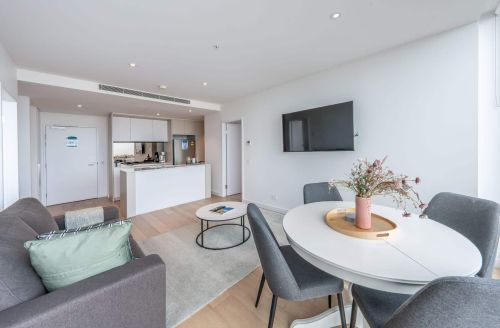
The setup is fully residential. Instead of a single room, corporate housing typically offers separate living areas, bedrooms, kitchens, and often dining or workspace zones. You can cook your own meals, do laundry without leaving the apartment, and organize your day much like you would at home. This layout supports normal routines rather than forcing guests to adapt to hotel-style living.
Lease terms are another defining feature. Corporate housing is designed with flexibility in mind. Stays are usually shorter than traditional rentals but longer than hotel bookings, with simplified contracts that suit project-based assignments, relocations, or extended training periods. You are not locked into long leases, yet you still benefit from stability and predictability.
Most importantly, corporate housing is built around the idea that professionals are living, not just sleeping, in space. Privacy is respected, housekeeping is typically limited and scheduled, and residents are expected to manage parts of their daily life independently. This model works well for executives, consultants, and relocating employees who want comfort, autonomy, and a sense of normalcy during extended stays.
What Is an Extended Stay Hotel?
An extended stay hotel, by contrast, starts from a hospitality-first mindset. It is essentially a hotel model adapted to allow guests to stay longer than a few nights. While the stay length may be extended, the core design logic remains rooted in short-term occupancy.
Room layouts reflect this. Most extended stay hotels still rely on daily-use room designs, often centered around a single multifunctional space. Small kitchenettes may be included, but they are usually limited in size and capability. Storage, workspace, and separation between living and sleeping areas are often minimal compared to residential setups.
The operational structure also follows hotel patterns. Front desk services, standardized housekeeping schedules, and uniform policies are designed for frequent guest turnover. Even when stays last several weeks, the environment continues to feel transactional rather than residential.
Extended stay hotels are built around short-term occupancy patterns that have been stretched, not reinvented. They work well for travelers who want predictable services, minimal responsibility, and hotel-style convenience. However, for professionals who need to settle into a routine, manage work-life balance, and feel “at home” during a longer assignment, the limitations of this model often become noticeable over time.
3. Cost Breakdown: Where Companies Actually Spend More (or Less)
When organizations compare accommodation options for extended business stays, the real cost differences often show up not in headline rates, but in how expenses behave over time. Understanding these patterns helps companies make smarter, more sustainable housing decisions.
Nightly vs Monthly Cost Structures
Nightly billing models are designed for short stays. While they seem flexible, they tend to inflate long-term spending because costs reset every 24 hours. Each night is priced as a standalone transaction, which means companies continue paying a premium even when an employee stays for weeks or months. Over time, this structure quietly compounds expenses, especially when stays are extended unexpectedly.
In contrast, bundled monthly structures are built around stability. Instead of fluctuating daily charges, costs are consolidated into a single, predictable arrangement. This approach smooths out spending by spreading services, utilities, and usage over a longer period. For companies, this translates into fewer surprises and a clearer understanding of total commitment from the start, making long-term planning far more practical.
Hidden & Indirect Costs Companies Overlook
Some of the most significant expenses never appear on an invoice. Productivity loss is a major one. Cramped or poorly designed spaces can affect focus, sleep quality, and overall performance. When employees struggle to work or recharge comfortably, the indirect cost shows up in reduced efficiency and morale.
Dining is another overlooked area. Frequent meals outside may seem convenient, but they add up quickly and limit healthy, routine eating. In-unit kitchens, by comparison, naturally reduce this recurring expense and give employees more control over daily habits.
There’s also the administrative burden. Managing extensions, changing check-in dates, or coordinating multiple bookings consumes valuable staff time. Each adjustment requires approvals, communication, and tracking, creating hidden labor costs that quietly drain resources.
Budget Predictability for Finance Teams
From a finance perspective, unpredictability is costly. Accommodation models that rely on nightly billing make forecasting difficult, especially when stay durations shift. Month-to-month variance complicates approvals, reconciliations, and internal reporting, often requiring repeated justification for the same assignment.
Fixed-term housing simplifies this process. With a defined duration and structure, finance teams can approve budgets once, allocate funds confidently, and move on. Predictable costs reduce back-and-forth, support cleaner forecasts, and align better with corporate planning cycles—making everyone’s job easier while keeping spending under control.
4. Comfort & Living Quality: The Productivity Multiplier
When professionals evaluate accommodation for extended assignments, comfort is often treated as a “nice to have.” In reality, living quality directly influences productivity, focus, and long-term performance. Over weeks or months, the environment you live in doesn’t just support your work—it actively shapes how well you can do it.
Space, Privacy, and Mental Well-Being
One of the most underestimated advantages of high-quality executive living is space. Having distinct areas for work, rest, and daily life creates natural boundaries that the brain relies on to stay balanced. When your laptop isn’t competing with your bed or dining table, it becomes easier to switch off at the end of the day and return to work refreshed the next morning.
Privacy plays an equally important role. Long assignments can be mentally demanding, especially when deadlines, time-zone differences, or leadership responsibilities are involved. A private, quiet space allows professionals to decompress without interruption. This sense of control over one’s environment reduces background stress, which often goes unnoticed until burnout sets in.
Over time, cramped or shared living conditions can amplify fatigue. Noise, lack of personal space, and constant visual clutter slowly drain mental energy. In contrast, a well-designed living space supports emotional stability. It gives residents room to think clearly, recharge properly, and maintain healthy routines—key defenses against burnout during long-term projects or relocations.
Kitchen, Laundry, and Daily Routines
It’s easy to underestimate how much daily routines affect work performance—until they become inconvenient. Over a 60–180 day stay, small comforts compound into meaningful time and energy savings. A functional kitchen, for example, allows residents to eat on their own schedule, choose healthier meals, and avoid the fatigue that comes from constant takeout or restaurant dining.
Laundry access is another quiet productivity booster. Not having to plan outfits around limited services or external laundromats removes friction from daily life. Clean clothes are always available, routines stay predictable, and mental bandwidth is freed up for work that actually matters.
These conveniences reduce what psychologists often call “decision fatigue.” When everyday tasks are simple and familiar, professionals conserve cognitive energy. Less effort spent managing basics means more focus available for meetings, problem-solving, and strategic thinking.
Ultimately, reduced friction in daily living leads to sharper focus and greater consistency at work. Comfort isn’t indulgence—it’s infrastructure. When daily life runs smoothly, productivity follows naturally, making living quality a true multiplier rather than a background detail.
5. Productivity & Performance Outcomes
Productivity during an executive stay is shaped by far more than internet speed or location. The way a living space supports daily work habits, focus, and rest plays a direct role in professional performance. Executive apartments are often designed with this balance in mind, offering an environment that supports both output and recovery.
Work-from-Home Readiness
One of the biggest productivity differences comes down to dedicated workspaces versus makeshift desks. In a well-planned executive apartment, work areas are intentional. You’re more likely to find a proper desk, ergonomic seating, good lighting, and enough space to spread out documents or use multiple screens. This physical separation between “work mode” and “living mode” helps the brain switch on and off more effectively, reducing fatigue and improving focus during working hours.
In contrast, makeshift setups—such as working from a dining table or couch—often lead to poor posture, constant interruptions, and blurred boundaries between work and rest. Over time, this can reduce concentration and increase stress, especially during long assignments.
Another critical factor is a reliable environment for virtual meetings. Executive apartments are typically quieter and more predictable than short-stay accommodations. Stable internet, controlled noise levels, and fewer random interruptions make it easier to join video calls confidently, host client meetings, or deliver presentations without distraction. When your surroundings support professionalism, you’re less likely to feel anxious about background noise, sudden housekeeping knocks, or connectivity issues—allowing you to focus fully on the conversation at hand.
Sleep Quality and Routine Stability
High performance doesn’t come only from productive days—it’s built on consistent, high-quality rest. One major advantage of executive-style living is the reduction in noise, foot traffic, and guest turnover. Unlike hotels, where hallways stay busy and neighbors change frequently, executive apartments tend to be calmer and more residential. Fewer late-night disturbances and early-morning disruptions translate directly into better sleep quality.
Routine stability is another often-overlooked performance booster. When you wake up in the same environment each day, follow familiar morning habits, and return to a quiet space at night, your body naturally settles into a rhythm. This consistency improves sleep cycles, energy levels, and mental clarity.
Over time, a stable routine positively affects on-site performance. Executives who sleep well and maintain regular schedules tend to make clearer decisions, manage stress better, and sustain focus across long workdays. Instead of feeling like you’re constantly “passing through,” a stable living setup helps you feel grounded—allowing you to show up sharper, calmer, and more effective in your professional role.
6. Long-Term Stays: Where the Financial Gap Widens
When work assignments stretch beyond a few weeks, accommodation costs stop being a small line item and start becoming a strategic decision. This is where the financial and practical gap between hotels and long-stay housing models becomes much more visible. What feels manageable at first can quickly turn into an expensive and inefficient choice over time.
30–60 Day Assignments
For assignments lasting one to two months, hotels can still seem like a reasonable option. The convenience is familiar: daily housekeeping, on-site dining, concierge support, and minimal setup. For short-term executives or consultants who expect intense schedules and limited personal time, this model often feels “easy” at the outset.
However, this is also where the early signs of diminishing returns appear. Nightly hotel rates—especially in business districts—add up quickly over 30 to 60 days. What looked acceptable on a weekly expense report can balloon into a surprisingly high monthly cost. Add to that ongoing spending on restaurant meals, laundry services, and incidental charges, and the total cost often exceeds initial estimates.
There’s also a comfort factor to consider. Living out of a single room for weeks can feel restrictive. Limited storage, lack of a proper workspace, and no separation between living and sleeping areas can quietly affect productivity and well-being. While hotels still work at this stage, many organizations begin to question whether the premium is truly justified as the stay approaches the two-month mark.
60–180+ Day Projects
Once assignments extend beyond 60 days, housing models such as executive apartments or serviced residences consistently outperform traditional hospitality options. The financial difference becomes hard to ignore. Monthly pricing structures, inclusive utilities, and reduced service frequency significantly lower the overall cost compared to paying hotel rates night after night.
Beyond cost, employee experience improves in measurable ways. Having separate living, working, and sleeping spaces creates a sense of routine and normalcy. Access to a kitchen encourages healthier eating and reduces daily expenses. Privacy increases, which is especially important during long, demanding projects.
These factors directly influence employee satisfaction and assignment completion rates. Professionals who feel settled and comfortable are more likely to stay focused, manage stress effectively, and see long-term projects through to completion. From an employer’s perspective, this reduces burnout risk, unplanned early returns, and the hidden costs of disrupted assignments.
7. Use-Case Analysis: Which Option Fits Which Business Scenario?
Choosing the right accommodation model isn’t just about cost—it’s about matching living arrangements to how people actually work, move, and live during an assignment. Below is a practical breakdown of how different business scenarios align with different accommodation needs.
Construction & Infrastructure Projects
Construction and infrastructure projects often involve a mix of rotating crews and core long-term staff, and their housing needs can differ significantly. Rotating crews—such as contractors or technicians working in shifts—usually benefit from practical, cost-efficient accommodation with flexible check-in and check-out terms. Frequent turnover makes hotel-style stays or shared serviced units more suitable, especially when housekeeping, linen changes, and front-desk support reduce operational friction.
Core long-term staff, such as project managers or site engineers, typically stay for several months or longer. For them, apartment-style living makes more sense. These professionals value privacy, personal space, and the ability to settle into a routine. Storage space for equipment, documents, or personal items becomes essential, as does reliable parking for site vehicles. Downtime also matters—after long shifts, access to quiet living spaces, kitchens, and separate bedrooms supports rest and productivity far better than compact hotel rooms.
Corporate Relocation & Temporary Transfers
Corporate relocation scenarios usually involve executives, managers, and specialists moving temporarily to a new city or country. These individuals often maintain demanding schedules and require accommodation that feels stable and professional from day one. Fully serviced apartments are commonly the best fit here, offering a balance between comfort and independence without the impersonality of a hotel.
Family considerations play a major role in this scenario. When assignments extend beyond a few weeks, dual occupancy or family stays become common. Apartments with multiple rooms, in-unit laundry, and kitchen facilities make everyday life manageable for spouses or children. This setup reduces stress during relocation and helps employees remain focused on their roles, knowing their families are comfortable and secure.
HR-Led Workforce Mobility Programs
In HR-led workforce mobility programs, the priority is consistency across multiple locations. Large organizations often relocate employees across cities or regions and need predictable accommodation standards everywhere. Serviced apartments that follow a standardized model—similar layouts, services, and amenities—help ensure a uniform employee experience regardless of destination.
Equally important is policy alignment and compliance. HR teams must ensure accommodation choices fit internal travel policies, duty-of-care obligations, and budget frameworks. Apartments with transparent pricing, clear service inclusions, and flexible lease terms simplify approvals and reporting. Over time, this consistency reduces administrative burden while improving employee satisfaction and compliance across the organization.
8. Regional Factors: Why Location Changes the Equation
Where an executive stay is located plays a much bigger role than many people realize. Workforce dynamics, infrastructure, and local housing supply can dramatically shape how executive apartments and extended stays function in practice. What works smoothly in one region may feel restrictive or expensive in another, which is why location-specific realities matter so much.
Workforce Patterns in High-Growth States
In high-growth regions such as Texas, Florida, and California, executive housing demand is often driven by large, project-based workforces. Industries like energy, construction, technology, healthcare expansion, and manufacturing frequently rely on professionals who are relocated for defined but extended assignments—often lasting several months rather than a few weeks. These are not tourists or short-term business travelers; they are professionals who need stability, space, and routines that feel closer to home.
At the same time, housing availability in these markets is often uneven. Rapid population growth and corporate expansion can outpace residential development, especially in secondary cities or suburban business corridors. While hotels may be plentiful in downtown cores, they are not always practical for longer assignments due to cost, limited living space, and a lack of privacy. This gap is where executive apartments become especially valuable, offering furnished living with services tailored to longer stays.
However, hotel saturation versus apartment availability varies widely by region. Some high-growth states have invested heavily in hospitality infrastructure, while others struggle to keep up. As a result, executives in these areas often face fewer housing choices and must weigh cost, comfort, and location more carefully than they would in slower-growth markets.
Why This Comparison Matters More in Certain Markets
Regional comparisons become even more important in markets characterized by long travel distances and limited short-term rental options. In sprawling states or regions with underdeveloped public transport, staying close to a worksite is critical. Long commutes are not just inconvenient—they directly impact productivity and work-life balance. In such areas, executive apartments located near industrial zones or corporate campuses often outperform hotels that are clustered in city centers.
Additionally, some regions have fewer short-term rentals due to local regulations, seasonal demand, or a lack of investor-owned housing. This puts increased pressure on extended-stay inventory, especially during peak project cycles. When multiple corporate projects overlap, availability tightens quickly, driving up prices and reducing flexibility.
In these markets, understanding the local housing equation is essential. Choosing between hotels and executive apartments is not just about preference—it’s about what the region can realistically support. Location shapes availability, pricing, service levels, and ultimately the quality of the executive living experience.
9. Risk Management & Duty of Care
Employee well-being as a compliance issue
For employers, duty of care is no longer just a moral responsibility—it is a formal compliance obligation. When employees are relocated for assignments, projects, or leadership roles, their living conditions become part of the employer’s risk profile. Poor-quality housing, unsafe neighborhoods, or inadequate support can expose organizations to legal, reputational, and operational risks. Comfortable, well-managed accommodation helps demonstrate that the employer has taken reasonable steps to protect physical safety, mental health, and overall well-being. This is especially important for international relocations or long-term postings, where stress levels are naturally higher. By proactively providing stable housing, companies reduce the likelihood of health complaints, burnout, or disputes that could escalate into compliance concerns.
Reduced relocation fatigue and turnover risk
Relocation fatigue is a real and often underestimated risk. The disruption of moving cities or countries—finding housing, adjusting to new routines, and balancing work expectations—can quickly overwhelm even senior professionals. When housing is poorly planned, this fatigue intensifies, leading to frustration, disengagement, and in some cases early assignment termination. From a risk management perspective, this is costly. Failed relocations result in wasted relocation budgets, project delays, and lost talent. Providing well-equipped, ready-to-live-in accommodation reduces cognitive and emotional load on employees, allowing them to focus on their roles sooner. When employees feel settled quickly, stress levels drop, productivity stabilizes, and the risk of premature resignation or underperformance is significantly reduced.
Housing as a retention strategy
Beyond risk mitigation, housing plays a powerful role in long-term retention. Employees often interpret housing quality as a signal of how much the organization values them. Thoughtfully selected accommodation—safe, comfortable, and aligned with professional lifestyles—builds trust and loyalty. It tells employees that their employer is invested not only in their output, but also in their quality of life. This perception matters during critical moments, such as contract renewals, promotion decisions, or future relocation discussions. Employees who have positive relocation experiences are more likely to accept future assignments and stay with the organization longer. In this way, housing shifts from being a logistical necessity to a strategic retention tool. By integrating accommodation decisions into risk management and duty-of-care planning, organizations protect their people, reduce hidden costs, and strengthen workforce stability in a competitive talent market.
10. Decision Framework: How Companies Should Choose
Selecting the right accommodation model for executives or relocating employees isn’t just a logistical task—it’s a strategic decision that affects cost control, productivity, and overall employee satisfaction. The checklist below is designed to help companies evaluate their priorities clearly and make confident, well-aligned choices.
Length of Stay
Start by defining how long the employee will need accommodation. Short-term stays often benefit from more service-oriented setups, while longer assignments typically require a living environment that feels sustainable rather than temporary. If the stay extends beyond a few weeks, comfort, storage space, and routine-friendly layouts become increasingly important. The longer the stay, the more value there is in accommodation that supports normal living rather than constant turnover.
Role Seniority
The seniority of the role should influence the level of privacy, space, and service provided. Senior leaders often require quieter environments, room to host meetings, or simply a higher standard of comfort that reflects their position. Mid-level or project-based staff may prioritize functionality and convenience over premium features. Aligning accommodation quality with role expectations helps reinforce respect, motivation, and professional consistency.
Project Intensity
Consider how demanding the assignment will be. High-pressure projects with long working hours leave little time or energy for managing day-to-day living tasks. In these cases, some level of included service can significantly reduce stress and help employees stay focused. For lower-intensity or more flexible roles, employees may prefer greater independence and fewer interruptions, even if that means fewer services.
Budget Predictability Needs
From a finance perspective, predictability often matters more than the lowest possible cost. Accommodation options that bundle services into a fixed monthly rate make budgeting easier and reduce administrative complexity. This is especially valuable for multi-month assignments or when multiple employees are relocating at once. Clear, predictable costs also help avoid awkward discussions around reimbursements and unexpected add-ons.
Employee Experience Priorities
Finally, think about the message you want to send to your employees. Comfortable, well-considered accommodation signals that the company values their wellbeing, not just their output. A positive living experience can improve morale, reduce burnout, and even influence retention—especially for international or long-term relocations. When employees feel settled and supported outside of work, they tend to perform better inside it.
11. Final Verdict: Which Saves Companies More—And Why
When companies compare extended stay hotels and corporate housing, the question often starts with price. But the real answer lies deeper than nightly rates. The smarter comparison looks at value over time, employee productivity, and the overall business impact of each option.
A Clear, Balanced Conclusion
Both extended stay hotels and corporate housing serve legitimate business needs. Neither is universally “better”—the right choice depends on duration, employee expectations, and how closely the accommodation must support day-to-day work and living. Short stays prioritize convenience and speed. Longer assignments demand stability, comfort, and cost control. Understanding this distinction is what ultimately saves companies money.
When Extended Stay Hotels Make Sense
Extended stay hotels are ideal for short-term assignments, typically a few weeks to a month. They work well when companies need quick availability, predictable billing, and minimal setup. For employees on brief projects, training programs, or transition periods, hotels reduce administrative effort. Daily or frequent housekeeping, on-site amenities, and 24/7 front-desk support add convenience and limit distractions.
From a budgeting perspective, extended stay hotels are easier to approve for short durations because costs are straightforward and familiar. When time is limited and flexibility matters more than personalization, hotels can be the most efficient option.
When Corporate Housing Delivers Superior Long-Term Value
For assignments lasting two months or longer, corporate housing almost always delivers stronger long-term value. While the upfront planning may take slightly more effort, the payoff is significant. Monthly rates are typically lower than extended hotel stays, utilities are bundled, and living spaces are designed for real life—not temporary occupancy.
More importantly, corporate housing supports employee well-being. Separate living and sleeping areas, full kitchens, privacy, and a residential environment reduce burnout and help employees settle into a productive routine. Fewer relocations, fewer service interruptions, and a more stable lifestyle translate into better focus and stronger performance—benefits that don’t always show up on an invoice but matter deeply to businesses.
Reframing “Cost” as Total Business Impact
The biggest mistake companies make is viewing costs purely as nightly expenses. True cost includes employee satisfaction, productivity, retention, and the administrative time spent managing stays. A cheaper daily rate can become expensive if it leads to fatigue, inefficiency, or repeated moves.
In the end, companies save more when they match accommodation type to stay length and employee needs. Extended stay hotels win on speed and simplicity. Corporate housing wins on sustainability, comfort, and long-term financial efficiency. The real savings come from choosing what supports the business—not just the budget line.
FAQs for HR & Procurement Teams
When it comes to managing employee accommodation—whether for relocations, temporary transfers, or workforce mobility programs—HR and procurement teams often face similar questions. Here’s a clear guide to the most common queries and practical answers.
1. What types of accommodation are best for different employee profiles?
- Short-term assignees or rotating staff: Hotel-style or serviced apartments with flexible terms and housekeeping support are ideal.
- Long-term executives or families: Fully furnished serviced apartments with multiple bedrooms, kitchens, and laundry facilities provide comfort, privacy, and stability.
- Large mobility programs: Standardized serviced apartments across locations ensure consistency in experience, compliance, and budgeting.
2. How frequently is housekeeping included?
Housekeeping schedules vary depending on the property and the length of stay. Most serviced apartments offer weekly or bi-weekly cleaning by default. Daily or customized cleaning can usually be requested for executives or high-profile staff. HR teams should clarify this upfront to align with employee expectations.
3. Are utilities and amenities included in the cost?
Typically, serviced apartments bundle utilities, internet, and basic amenities into the monthly rate. Some may offer optional extras like gym access, parking, or premium TV channels at additional cost. Procurement teams should confirm inclusions to avoid unexpected expenses.
4. Can the accommodation handle family or dual occupancy?
Yes. Many serviced apartments are designed for families or dual occupancy, offering multiple bedrooms, full kitchens, and living areas. It’s important to confirm the maximum occupancy, bedding arrangements, and any additional charges for dependents.
5. How flexible are lease terms?
Flexibility is a key advantage of serviced apartments. Monthly leases are common, and most providers allow extensions or early terminations with notice. This makes it easier to adapt to changing project timelines or relocation schedules without incurring high penalties.
6. How do we ensure compliance with corporate policies?
Standardization is crucial. HR and procurement teams should request:
- Clear pricing and invoicing structure
- Documented service inclusions
- Health, safety, and duty-of-care certifications
- Local regulatory compliance for housing and taxes
7. What’s the process for handling maintenance or emergencies?
Most serviced apartments provide 24/7 on-call support for maintenance, security, or urgent repairs. HR teams should ensure employees know the contact process and that response times meet company expectations.
8. Are move-in and move-out procedures managed?
Yes. Quality serviced apartments usually provide assistance with move-in setup, orientation, and move-out cleaning, reducing the administrative burden on HR or procurement staff.
Contact Izeal Stay today to discuss your housing needs.