Smart Hospitality Solutions: How Technology Improves Guest Experience and Operations
Hospitality has always depended on comfort, convenience, and responsive service. What is changing is how accommodation providers deliver those fundamentals. Guests now expect fast communication, reliable internet, convenient access, simple booking processes, and accommodation that fits naturally into their routines.
At the same time, hotels, furnished-rental providers, corporate housing operators, and extended-stay businesses are looking for practical ways to reduce repetitive work, improve property operations, manage energy consumption, and respond to guest needs more effectively.
This is where smart hospitality solutions become valuable.
Smart hospitality is not simply about filling a property with connected devices. The strongest approach uses technology to solve specific operational or guest-experience problems. Digital check-in can reduce arrival friction. Smart access can simplify property entry. Automated messaging can provide information at the right time. Connected thermostats can help manage comfort and energy use. Property management systems can give staff a clearer view of reservations, occupancy, maintenance, and other tasks.
For extended-stay accommodation, the opportunity is particularly relevant because guests are not simply visiting for a night or two. They are temporarily living in the property. Technology therefore needs to support the practical realities of everyday life.
What Are Smart Hospitality Solutions?
Smart hospitality solutions are technology-based systems used by accommodation providers to improve guest experiences, streamline operations, and manage properties more effectively.
They can include a wide range of technologies, such as:
- Digital booking and reservation systems
- Contactless or digital check-in
- Smart locks and access control
- Connected thermostats
- Smart lighting
- Guest messaging platforms
- Property management software
- Maintenance management systems
- Energy monitoring
- Connected Wi-Fi and network infrastructure
- Data analytics
- Automated guest communications
The exact combination depends on the property and its operating model.
A small furnished apartment provider does not necessarily need the same technology stack as a large hotel. Likewise, a corporate housing company managing extended stays may prioritize different systems from a traditional hotel focused on high guest turnover.
The underlying principle is simple: technology should make a useful part of the guest or staff journey easier, faster, or more reliable.
Why Smart Hospitality Technology Matters
Accommodation involves a series of interactions, from the first property search through booking, arrival, the stay itself, maintenance requests, and checkout.
Each stage can create unnecessary friction.
A guest might struggle to find arrival instructions. A staff member might spend time answering the same Wi-Fi question repeatedly. A maintenance request might be passed between several people before reaching the person responsible for fixing it.
Connected systems can reduce some of these inefficiencies.
For example, automated pre-arrival communication can provide check-in information before a guest reaches the property. A digital access system can reduce dependence on physical key exchanges. A centralized property management platform can help staff see reservations and operational tasks in one place.
The objective is not automation for its own sake. The objective is to create a smoother experience while allowing hospitality staff to spend more time on situations where human judgment and assistance matter.
Key Smart Hospitality Solutions for Modern Properties
Digital Check-In and Contactless Access: Arrival is one of the first opportunities for a property to create a positive experience.Traditional check-in may require guests to wait at a desk, complete paperwork, collect a key, and receive instructions in person. Digital processes can simplify some or all of these steps.Depending on the property, guests may receive arrival information electronically and use digital or contactless access to enter their accommodation.This can be useful for business travelers, late arrivals, and extended-stay residents who may prefer a more independent arrival process.
However, digital access should always have a reliable support process behind it. If a guest cannot enter the property because of a device, connectivity, or access problem, they need a clear way to receive assistance.
Smart Room Controls: Connected room technology can give guests greater control over their environment.Examples include smart thermostats, lighting controls, connected blinds, and other room-management devices.These systems can potentially make it easier for residents to adjust temperature and lighting while also giving operators better information about property usage.But a smart room should not become a complicated room.Guests should be able to understand the controls quickly. If someone needs a manual simply to turn down the temperature or switch off a light, the technology may be creating more friction than it removes.Good smart-room design prioritizes intuitive controls and dependable operation.
Automated Guest Communication
Communication is one of the most practical applications of hospitality technology.
Guests often need the same basic information:
- Check-in instructions
- Wi-Fi details
- Parking information
- Property rules
- Checkout instructions
- Maintenance procedures
- Directions
- Answers to common questions
A digital guest communication platform can deliver this information consistently and at appropriate points during the stay.
For longer-term residents, communication can also make it easier to report maintenance issues or ask questions without relying on repeated phone calls.
Automation should support—not replace—human communication. When a request is unusual, urgent, or sensitive, guests should still have access to a person who can help.
Property Management Systems and Operational Efficiency
Much of hospitality happens behind the scenes.
Reservations, occupancy, housekeeping, maintenance, guest communications, property availability, and administrative tasks all need to be coordinated.
A property management system (PMS) can centralize information and help staff understand what needs attention.
For example, an operator may be able to see upcoming arrivals, current occupancy, scheduled cleaning, and outstanding maintenance tasks through a connected system rather than relying entirely on separate spreadsheets or messages.
The benefit depends on how well the technology fits the organization’s workflow.
A system that does not integrate properly with existing processes can create duplicate work. Staff may then spend more time entering information instead of using it.
For that reason, businesses should evaluate integration, usability, staff training, and ongoing support before implementing new hospitality technology.
Smart Hospitality for Extended-Stay and Furnished Housing
Smart hospitality becomes particularly interesting when accommodation is designed for 30-night-or-longer stays.
A short hotel visit has relatively simple requirements. An extended-stay resident may treat the accommodation as a temporary home.
They may need reliable Wi-Fi for work, a functional kitchen, laundry facilities, comfortable living space, easy property access, and a straightforward way to communicate about maintenance or other issues.
Izeal Stay provides furnished, move-in-ready homes and apartments for stays of 30 nights or longer, serving business travelers, relocating professionals, healthcare workers, workforce teams, construction crews, families, and other extended-stay guests.
For this type of accommodation, technology should support the resident’s routine rather than constantly demand attention.
A useful digital experience might mean receiving clear arrival information, accessing the property easily, finding Wi-Fi details without searching through paperwork, and reporting an issue through a simple communication channel.
The technology is valuable because it removes friction from everyday living.
Smart Hospitality and Guest Comfort
Technology should never be confused with hospitality itself.
A property can have smart locks, connected thermostats, automated messages, and a sophisticated app but still provide a poor guest experience if the accommodation is uncomfortable, maintenance is slow, or communication becomes difficult.
The strongest model combines digital convenience with human support.
Automation can handle predictable tasks while staff focus on exceptions and problems that require judgment.
For example, a system might automatically send Wi-Fi instructions, while a staff member handles a connectivity problem that cannot be solved through standard troubleshooting.
This balance is especially important for extended-stay residents. Someone living in a furnished property for several months needs confidence that assistance will be available when a genuine problem occurs.
Energy Management Through Smart Technology
Energy management is another practical area for hospitality technology.
Heating, cooling, lighting, and other building systems can contribute substantially to operating costs. Smart controls and monitoring systems can help property operators understand usage and identify opportunities to reduce unnecessary consumption.
For example, an unoccupied unit may not require exactly the same operating settings as an occupied property.
Automation can help manage those differences according to the property’s operating policies.
The goal should not be to compromise guest comfort. Instead, smart energy management aims to use information and automation to avoid unnecessary consumption while maintaining an appropriate environment for residents.
This can be particularly relevant to furnished and extended-stay properties where units may have different occupancy patterns over time.
Smart Hospitality and Personalization
Technology can also help properties provide more consistent and relevant experiences.
Where appropriate and with suitable privacy safeguards, guest information can be used to support preferences such as communication methods, arrival requirements, or other service details.
Personalization, however, should be approached carefully.
Hospitality providers need to understand what information they collect, why it is collected, how it is stored, and who can access it. Guests should not feel that technology is monitoring them unnecessarily.
A useful principle is to collect and use information because it improves a legitimate part of the guest experience—not simply because the technology makes it possible.
Smart Technology for Corporate and Workforce Housing
Smart hospitality is not limited to hotels.
Corporate housing and workforce accommodation can also benefit from digital systems, particularly when employers are managing multiple employees or properties.
Companies may need to coordinate arrival dates, occupancy, extensions, property requirements, and communication for several employees at once.
Izeal Stay’s workforce housing service is designed for temporary workforce needs, including construction crews, contractors, and project teams.
Digital processes can make this type of accommodation easier to coordinate by reducing manual communication and keeping important information organized.
Similarly, corporate housing can support professionals who need furnished temporary accommodation during relocations, business assignments, and other extended stays.
The technology should ultimately serve the resident and the employer by reducing administrative friction.
Smart Hospitality for Maintenance and Property Operations
Maintenance is an area where technology can have a direct impact on the guest experience.
A broken appliance, heating problem, plumbing issue, or connectivity failure can quickly become frustrating during an extended stay.
Digital maintenance platforms can help operators record requests, assign tasks, monitor status, and maintain a history of issues.
Connected devices may also provide information that helps identify certain problems before a guest reports them, depending on the property’s systems.
However, technology does not eliminate the need for competent maintenance teams. It simply gives them better information and organization.
The real measure of success is whether a problem gets identified, communicated, and resolved efficiently.
How to Choose the Right Smart Hospitality Technology
Businesses should avoid adopting technology simply because it is marketed as the latest innovation.
Start by identifying the actual problem.
Ask:
- Where do guests currently experience unnecessary friction?
- Which staff tasks are repetitive?
- What information is difficult to track?
- Which systems need to integrate?
- Is the technology easy for guests to use?
- What happens if the system fails?
- How will guest information be protected?
- What training will staff require?
- Can the system scale as the property portfolio grows?
- Does the expected benefit justify the implementation and ongoing cost?
This approach helps operators focus on solutions rather than gadgets.
A property may gain more from improving digital communication and maintenance workflows than from installing an expensive collection of connected devices that guests rarely use.
Smart Hospitality Should Be Built Around the Guest Journey
The strongest technology strategy connects individual tools into a coherent experience.
A guest should be able to:
Book → receive useful information → arrive easily → access the property → control the environment → request assistance → communicate with staff → check out smoothly.
Each step should feel connected rather than like a separate technology experiment.
For an extended-stay resident, the journey continues well beyond check-in. The accommodation becomes part of the person’s daily life, so reliable Wi-Fi, easy communication, practical property access, and straightforward maintenance support can have a greater impact than novelty features.
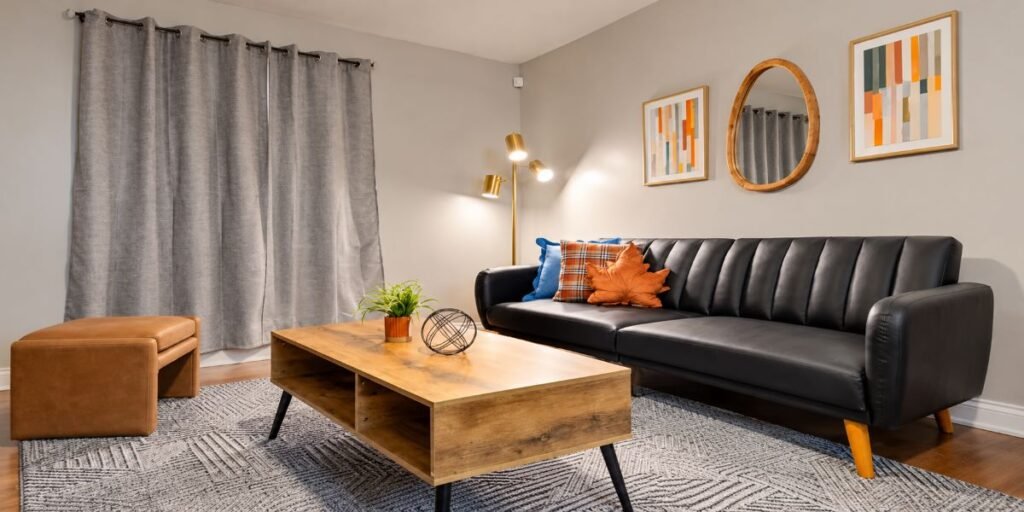
Izeal Stay’s furnished apartments and extended-stay housing are designed around temporary residential needs, with individual properties offering different features and amenities. Depending on the property, furnished accommodations may include living-room furniture, kitchen equipment and housewares, laundry facilities, utilities, high-speed Wi-Fi, and streaming television.
Technology can complement these residential features by making the stay easier to manage.
The Future of Smart Hospitality
Smart hospitality is likely to become increasingly connected and data-informed.
Artificial intelligence can assist with certain operational tasks and analysis. Connected devices can provide information about property conditions. Automation can handle routine communication. Digital platforms can help businesses coordinate increasingly complex accommodation operations.
But the underlying purpose remains unchanged.
Guests want accommodation that is clean, comfortable, reliable, secure, and easy to use. Employees want systems that help them do their jobs rather than create additional administrative work.
The most effective smart hospitality solutions will therefore be the ones that disappear into the background. Guests should notice the convenience rather than the technology itself.
Conclusion
Smart hospitality solutions can improve both sides of the accommodation experience when they are selected and implemented around genuine needs.
Digital check-in can simplify arrivals. Smart access can make entry more convenient. Connected room controls can improve usability and support energy management. Guest communication platforms can deliver important information efficiently. Property management and maintenance systems can give staff greater visibility into daily operations.
For extended-stay housing, furnished apartments, corporate accommodation, and workforce housing, these capabilities can be particularly valuable because residents depend on the property as a temporary home rather than simply a place to spend the night.
The goal, however, should never be to add technology for its own sake. Start with the guest journey and operational challenges, choose systems that solve those problems, protect guest information, and maintain a clear human support option when technology cannot provide the answer.
When thoughtfully implemented, smart hospitality technology does more than modernize a property. It can create a smoother, more responsive, and more practical experience for the people living there while helping accommodation providers operate with greater clarity and efficiency.