
When businesses send employees, contractors or specialist teams to Tampa, Florida, for projects lasting several weeks or months, accommodation needs to be planned as part of the wider project operation. Finding available rooms is only one consideration. Companies must also think about worksite locations, commuting distances, employee numbers, accommodation costs, arrival schedules and the possibility of project delays.
Tampa’s diverse economy supports work across healthcare, construction, logistics, manufacturing, finance and technology. These industries often involve employees travelling from other cities or states to complete temporary assignments. Some projects require a small group of specialists, while others involve larger teams working across multiple sites throughout the Tampa Bay area.
For these assignments, extended-stay housing can provide a more practical living arrangement than accommodation intended primarily for short visits. Furnished apartments and homes give employees access to everyday residential facilities while allowing businesses to coordinate accommodation around their operational requirements.
A structured approach helps project managers control housing expenses, simplify administration and provide employees with a comfortable place to stay throughout their assignments.
1. Identify Project Locations Before Selecting Accommodation
The first step in organizing extended-stay housing in Tampa is understanding where employees will actually work.
Tampa covers a broad metropolitan area, and accommodation that appears centrally located may not necessarily provide convenient access to a particular worksite. Traffic conditions, road connections and travel times can influence how practical a property will be for employees commuting every day.
Start by identifying the primary employment areas associated with the project.
-
Downtown Tampa: Relevant for professional services, financial organizations, government-related assignments and businesses operating in the central business district.
-
Westshore: A major commercial area worth considering for corporate teams and employees working near Tampa International Airport.
-
Port Tampa Bay: An important location for shipping, logistics, transportation and industrial assignments.
-
University and medical districts: Potentially suitable for healthcare professionals, researchers and educational projects.
-
East Tampa: An area to consider for certain construction, industrial and distribution-related assignments.
The wider Tampa Bay area also matters. Employees working in Brandon, Riverview, Temple Terrace or other surrounding communities may benefit from accommodation closer to their actual project locations.
Consider access to major routes such as I-275, I-4, the Selmon Expressway and Veterans Expressway when comparing properties. However, do not rely entirely on estimated distances. A relatively short journey can become less convenient during busy commuting periods.
The best accommodation location is generally one that balances worksite accessibility, residential convenience and employees’ daily travel requirements.
2. Determine How Many Employees Need Housing
Once the project locations are established, calculate the number of employees who require temporary accommodation.
Housing requirements can vary significantly depending on the type of assignment. A company sending four engineers to Tampa will have different needs from a construction business accommodating twenty workers across several project phases.
Create an employee accommodation plan that includes:
-
Total number of employees travelling to Tampa.
-
Expected arrival and departure dates.
-
Individual bedroom requirements.
-
Whether employees are comfortable sharing common living spaces.
-
Family members accompanying employees.
-
Accessibility requirements.
-
Parking and transportation needs.
-
Any applicable pet accommodation requirements.
For example, consider an infrastructure project expected to last four months. Eight employees may be assigned to the project, but only four may need to arrive during the initial preparation stage. The remaining employees could join when the main installation work begins.
Booking accommodation for everyone from the first day may create unnecessary expenses.
Instead, coordinate housing around the actual deployment schedule. This helps businesses avoid paying for unused accommodation while ensuring suitable arrangements are available when additional employees arrive.
For larger assignments, it is also useful to distinguish between employees who need individual apartments and those who can comfortably share a larger furnished property.
3. Choose the Right Type of Extended-Stay Housing
The accommodation should match the project’s duration, workforce size and employees’ everyday living requirements.
For assignments lasting 30 nights or longer, furnished apartments and homes can provide a residential environment with facilities that support daily routines.
Furnished apartments for individual professionals
Furnished apartments are worth considering for engineers, consultants, healthcare professionals, managers and other employees travelling independently.
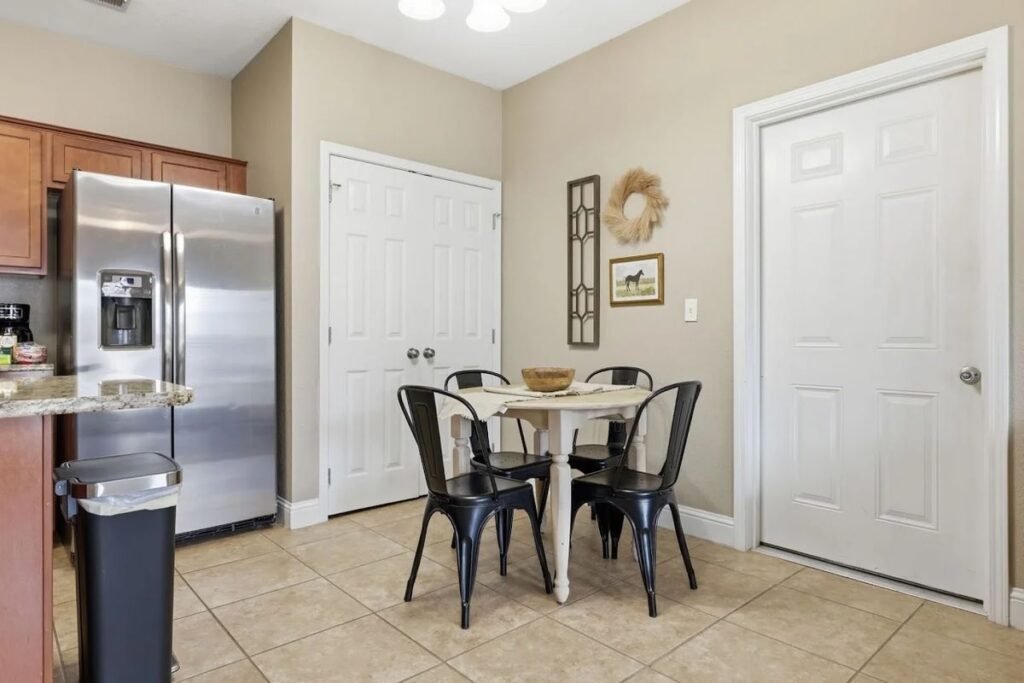
Unlike accommodation consisting primarily of a sleeping area, an apartment can provide separate living and sleeping spaces, a kitchen and other household facilities, depending on the property.
This arrangement can help employees maintain their usual routines, prepare meals and enjoy greater privacy after working hours.
Businesses exploring this option can review iZeal Stay’s furnished apartments for extended accommodation requirements.
Furnished homes for project groups
When several employees are travelling together, a multi-bedroom furnished home may provide a suitable alternative.
Shared living spaces and kitchen facilities can make it easier for colleagues to stay in the same property while maintaining separate sleeping arrangements.
However, companies should establish occupancy expectations before booking. Employees may have different preferences regarding privacy, bedroom sharing and personal space.
A property’s maximum occupancy should never be treated as an indication that every sleeping arrangement will be appropriate for the team.
Workforce housing for operational teams
Construction crews, travelling technicians, installation specialists and other mobile employees may require accommodation throughout lengthy project assignments.
Their requirements can differ from those of individual corporate travellers. Reliable internet, laundry access, convenient parking and practical commuting arrangements may be particularly important.
iZeal Stay’s workforce housing is relevant to businesses exploring accommodation designed around temporary workforce requirements.
Ultimately, the right option depends on employee numbers, assignment length, privacy expectations and the available accommodation budget.
4. Establish a Complete Extended-Stay Housing Budget
Accommodation expenses should be included in the project budget before employees begin travelling.
One common planning mistake is comparing properties using advertised rental amounts alone. Different furnished properties may include different facilities, services and additional charges.
A realistic Tampa extended-stay housing budget should account for:
-
Monthly accommodation charges.
-
Electricity, water and other utilities.
-
Internet access.
-
Cleaning arrangements.
-
Parking fees.
-
Applicable taxes and additional charges.
-
Deposits and payment requirements.
-
Potential booking extensions.
-
Any additional property-specific expenses.
Request an itemized breakdown before confirming an arrangement. This makes it easier to compare properties on a consistent basis.
For example, one furnished apartment may include internet and utilities, while another may require separate payments for certain services. Similarly, laundry facilities and parking arrangements can vary between properties.
Companies should confirm whether furniture, kitchen equipment, housewares, laundry facilities, utilities, high-speed Wi-Fi and streaming television are included in the specific property being considered. These features should not be assumed based on a general furnished-housing description.
Businesses arranging accommodation for several employees should also consider the overall cost per person and the length of occupancy.
iZeal Stay’s extended-stay housing options provide a starting point for exploring furnished accommodation intended for longer assignments.
It is also sensible to include a contingency allowance for possible project delays, additional employees or changes to the original schedule.
5. Check Essential Facilities Before Employees Arrive
A property suitable for a short business visit may not provide everything employees need during a three-month assignment.
People staying away from home for extended periods need facilities that support everyday living, not simply somewhere to sleep after work.
Before confirming accommodation, evaluate the following features.
Furnished bedrooms: Check that sleeping arrangements provide suitable comfort, storage and privacy. Confirm the number of bedrooms and beds rather than relying on general occupancy descriptions.
Kitchen facilities: A properly equipped kitchen allows employees to prepare meals and manage everyday food expenses. Check which appliances, utensils and cooking equipment are provided.
Reliable internet: Wi-Fi supports video meetings, reporting, communication and access to company systems. Confirm the internet arrangements, particularly if employees need to work remotely outside normal business hours.
Laundry access: Employees working on construction sites, industrial assignments or extended shifts may need frequent access to washing facilities.
Workspace: Some employees may need a desk or quiet area for administrative responsibilities, online meetings or project documentation.
Parking: Confirm whether the property offers sufficient parking for personal vehicles, company cars or work-related transportation.
Air conditioning: Tampa’s warm and humid climate makes dependable cooling an important consideration during longer stays.
Not every furnished property offers identical facilities. Project coordinators should verify each requirement directly against the accommodation being considered.
6. Coordinate Housing With the Project Timeline
Project schedules frequently change. Equipment installation may take longer than expected, additional specialists may be required, or employees may need to arrive earlier than originally planned.
These changes can create accommodation difficulties if housing arrangements are not flexible.
Create a centralized housing schedule containing:
-
Employee names or team assignments.
-
Property addresses and allocations.
-
Confirmed check-in dates.
-
Expected departure dates.
-
Booking confirmation details.
-
Payment information.
-
Cancellation conditions.
-
Extension requirements and notice periods.
For example, an engineering team working on a Tampa facility upgrade may initially require accommodation for three months. If installation work is delayed, the company could need an additional four weeks.
Discuss extension arrangements with the accommodation provider before confirming the original booking. Ask how much advance notice is required, whether extensions depend on availability and how revised accommodation charges are calculated.
For projects involving multiple employee groups, consider using staggered booking dates. This ensures accommodation periods reflect actual deployment schedules rather than the overall project start and completion dates.
A designated housing coordinator should manage these changes and maintain communication with employees and the accommodation provider.
7. Account for Tampa’s Climate and Seasonal Conditions
Weather should be part of accommodation planning, particularly for projects scheduled during Florida’s warmer months.
Tampa experiences hot, humid summers, frequent thunderstorms and seasonal tropical weather. The Atlantic hurricane season runs from June through November, making preparation particularly important for assignments scheduled during this period.
Before employees arrive, consider the following:
-
Does the property have reliable air conditioning?
-
Is parking available in a suitable location?
-
What procedures apply during severe weather?
-
How will employees receive emergency property communications?
-
Are local weather alerts being monitored?
-
What arrangements apply if severe weather affects the accommodation?
Companies should ensure travelling employees understand their emergency procedures and know where to obtain official weather information.
This is especially relevant for outdoor construction teams, infrastructure specialists and employees working at sites where heavy rain, thunderstorms or tropical weather could interrupt operations.
Accommodation should also be reasonably accessible during normal working conditions, with alternative arrangements considered where the nature of the project makes disruption particularly challenging.
8. Establish a Clear Communication Process
Even a well-selected furnished property can create unnecessary problems if employees do not receive the information they need before arrival.
Before travelling to Tampa, each employee should receive a clear accommodation information sheet containing:
-
Full property address.
-
Check-in and check-out instructions.
-
Parking information.
-
Property access details.
-
Internet connection information, where available.
-
Property rules.
-
Maintenance contact details.
-
Emergency communication procedures.
For larger assignments, appoint one person to coordinate accommodation-related communication.
This individual can manage maintenance requests, internet problems, booking changes and employee questions without requiring every team member to contact different departments independently.
It is also useful to collect feedback during the first week of occupancy.
An employee might discover that parking arrangements are inconvenient or that additional kitchen equipment is needed. Addressing these issues early can improve the accommodation experience throughout the assignment.
A straightforward communication system also makes it easier to identify recurring problems and resolve them before they affect other employees.
9. Work With an Extended-Stay Housing Provider
Managing multiple furnished properties independently can become time-consuming, particularly when a business has employees arriving on different dates or working across several Tampa-area locations.
Working with a housing provider familiar with corporate and workforce accommodation can help companies explore suitable properties based on assignment length, employee numbers, preferred locations and facility requirements.
iZeal Stay provides furnished homes and apartments for business travellers, relocating professionals, workforce teams and other guests requiring accommodation for 30 nights or longer.
Its accommodation categories include corporate housing, furnished apartments, workforce housing and extended-stay options.
Businesses organizing projects in Tampa can explore iZeal Stay’s Tampa furnished housing options to review the location-specific accommodation offering.
When discussing a potential arrangement, provide the housing team with useful project information, including:
-
The expected assignment duration.
-
Number of employees requiring accommodation.
-
Preferred worksite locations.
-
Individual bedroom requirements.
-
Expected arrival and departure dates.
-
Required household facilities.
-
Parking and accessibility needs.
-
Potential extension requirements.
Providing these details early makes it easier to assess whether available accommodation is appropriate for the assignment.
Companies interested in understanding the provider’s broader approach can also visit the About iZeal Stay page.
Conclusion
Organizing extended-stay housing for project teams in Tampa, Florida, requires careful coordination between accommodation requirements and operational schedules. Businesses need to consider employee numbers, worksite locations, commuting arrangements, budgets, property facilities and the possibility of changing project timelines.
Starting the process early gives project managers more time to compare furnished apartments and homes, confirm property-specific facilities and coordinate arrival schedules. Choosing accommodation close to the actual worksite can also make everyday commuting more manageable for travelling employees.
For assignments lasting 30 nights or longer, furnished housing can provide the residential facilities employees need while helping businesses organize temporary accommodation around their workforce requirements.
Whether a company is sending a small group of technical specialists or coordinating housing for a larger construction crew, a structured approach makes extended assignments easier to manage.
By planning ahead, confirming accommodation details and exploring suitable options through iZeal Stay, businesses can create a more organized and comfortable housing arrangement for employees working in Tampa.